Description:
Chilkat Weaving
The intricate geometric textile weaving technique known as Chilkat translates the curvature of formline design into warp and weft. Traditionally, clan leaders and other high-ranking people have worn robes, leggings, and pouches made from Chilkat weaving at ceremonial events. While these traditions persist into modern times, earrings and other accessories make Chilkat available to a broader audience.
Traditionally woven from yellow cedar bark and mountain goat wool, Chilkat robes require at least one year of prepping materials and weaving. Inner bark is boiled to remove the sap, making it pliable and easy to strip into thin strands for warp. Warp is made by combining boiled and split cedar with wool spun together on the weaver's thigh. Contemporary weavers may use commercial wool instead of mountain goat wool as it is still soft and white but much easier to acquire. Natural materials like wolf moss, hemlock bark, alder bark, and copper, combined with a natural fixative like ammonia or urine, produced traditional yellow, black, and blue-green pigments. Modern commercial dyes add additional color options.
Chilkat robes are valued for their beauty and displays of heritage and identity. Sometimes, as a display of wealth and status, a clan leader might cut up a robe and distribute sections to guests at a celebration. From these remnants recipients can make leggings or pouches to be worn and displayed at their own events and occasions. A robe fragment from the 1880s is this month's featured artifact. The fragment can be seen in the Cedar: The Tree of Life exhibit at the Tongass Historical Museum through January 2027.
Object ID #: THS 83.1.75.1
Click to Enlarge
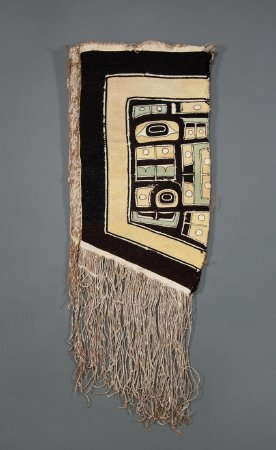 Chilkat robe fragment, circa 1880s.
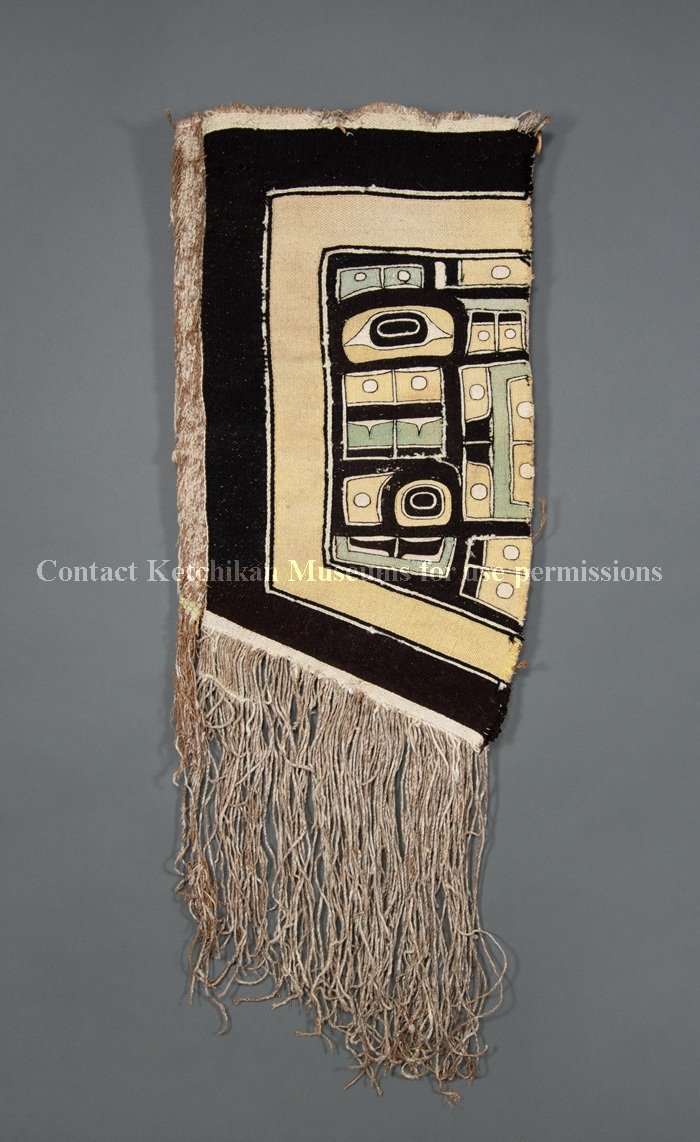 Chilkat robe fragment, circa 1880s.